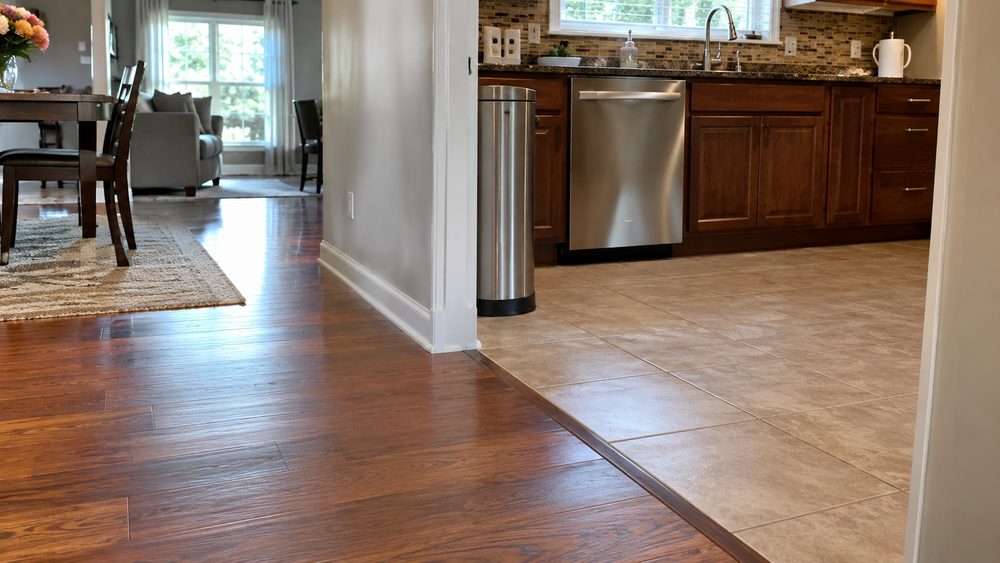
Walk through a home in Marietta, and you might cross three different flooring materials without thinking about it.
You enter through a hallway with wood-look planks.
A few steps later, you're standing on kitchen tile.
Upstairs, the bedrooms have carpet.
Every surface has the same basic purpose. It gives you somewhere to walk, place furniture, and carry on with everyday life.
But when it's time to clean, those floors don't necessarily need the same treatment.
And that's an important distinction.
A floor can look similar to another floor and still require completely different care.
Understanding that difference helps protect materials, prevent unnecessary wear, and make residential cleaning more effective.
Two Floors Can Look Alike but Behave Differently
One of the interesting things about modern homes is how convincingly different materials can imitate each other.
Luxury vinyl plank can resemble hardwood.
Porcelain tile can have a printed wood-grain pattern.
Laminate flooring can look remarkably similar to engineered wood.
From a standing position, the differences may not be obvious.
But the surface material matters more than the appearance when deciding how to clean it.
A product or method suitable for ceramic tile may be inappropriate for a particular wood finish.
Excessive moisture can also create problems for flooring materials that aren't designed to tolerate it.
That's why identifying the floor is a useful starting point.
If you're uncertain about the material, review any manufacturer documentation or installation records before applying an unfamiliar cleaning product.
Guessing based on color or texture isn't always reliable.
Hardwood: The Finish Matters as Much as the Wood
Hardwood flooring brings warmth and character to many homes throughout Atlanta and its northern suburbs.
Some houses have traditional wood flooring that has been refinished over time.
Others have engineered wood products with factory-applied finishes.
The care requirements can vary.
For ordinary maintenance, removing loose grit and debris is important because small particles can contribute to surface scratching underfoot.
A vacuum with appropriate settings or a suitable dust mop may help remove that debris.
When additional cleaning is needed, the method should follow the flooring manufacturer's instructions.
Excessive water is generally a poor choice for wood flooring.
And strong chemicals, abrasive tools, or products that leave unwanted residue can damage or change the appearance of certain finishes.
It's also useful to recognize when cleaning isn't the solution.
A scratch in the finish isn't necessarily dirt.
Discoloration caused by water damage won't disappear because someone mops more carefully.
Cleaning can maintain a finished floor, but it cannot replace professional refinishing or repair.
Tile: A Different Material, a Different Set of Details
Tile flooring is common in kitchens, bathrooms, laundry areas, and entryways.
It's often chosen because it can be practical to maintain in frequently used spaces.
But tile is not a single material.
Ceramic, porcelain, and natural stone can have different care requirements.
The grout also deserves consideration.
Even when the tile surface appears clean, grout lines may collect residue depending on their condition, finish, and exposure to everyday activity.
Some homeowners respond by reaching for the strongest available cleaner.
That isn't always a good idea.
Acidic or abrasive products can damage certain stone materials, grout, and finishes.
An appropriate product and cleaning method should be selected for the actual material.
Another point worth remembering: grout that's deteriorating, cracked tile, or damaged waterproofing requires maintenance or repair.
Ordinary cleaning won't correct those problems.
Taking care of tile means respecting both the visible surface and the materials holding it together.
Luxury Vinyl: Durable Doesn't Mean Indestructible
Luxury vinyl plank has become a familiar feature in many residential properties.
It can create the appearance of wood flooring without using the same material.
And while many products are designed for convenient maintenance, they still require appropriate care.
The safest approach is to follow the manufacturer's cleaning instructions.
Some products can leave a film that affects the appearance of the floor.
Others may be too aggressive for its wear layer.
Loose grit should be removed before wet cleaning, and liquid should not be allowed to accumulate around seams or flooring edges.
Furniture protection matters, too.
The marks left by heavy furniture, damaged chair feet, or repeated dragging aren't necessarily cleaning issues.
Sometimes preventing unnecessary wear is just as important as removing everyday residue.
Carpet: The Material That Holds What You Can't Always See
A carpeted bedroom presents another kind of cleaning challenge.
Instead of having a hard, continuous surface, carpet contains fibers that can trap loose particles.
That makes vacuuming an important part of regular maintenance.
Pay attention to the areas that receive the most foot traffic.
The path between the bedroom door and the bed.
The section near a desk.
The place where someone routinely sets down a bag or takes off their shoes.
These areas may require more frequent attention than parts of the room that receive little use.
Spills also need to be handled according to the carpet material and the nature of the substance involved.
Rubbing aggressively, over-wetting, or applying an unsuitable chemical may make a problem worse.
And some stains may require specialized treatment or may be permanent.
Professional carpet extraction and restoration should be distinguished from routine residential vacuuming.
Not every cleaning appointment includes specialized carpet services.
Why the Transitions Between Rooms Matter
One detail that gets overlooked in many cleaning conversations is the place where two flooring materials meet.
A strip of trim may separate kitchen tile from living room hardwood.
A doorway may connect carpet to vinyl plank.
A small transition piece may cover the edge between surfaces.
These places can collect ordinary dust and debris.
They can also be vulnerable to excessive moisture if a cleaning method intended for one surface is carried directly onto another.
When maintaining a home with multiple floor types, it helps to think about those boundaries.
Change cleaning tools or methods when necessary.
Avoid allowing residue or excess moisture to transfer between materials.
And pay attention to damaged transition strips that may need repair.
A careful cleaning routine doesn't simply follow a straight line from one end of the house to the other.
It adapts to the surfaces along the way.
What About Homes With Children and Pets?
Flooring needs can also change according to household activity.
Consider a family in Alpharetta with a dog that spends time in the backyard.
The flooring near the entrance may collect more grit and outdoor debris than the bedrooms.
A household with young children may see more frequent spills around the dining area.
And a home with relatively little foot traffic may require a different maintenance schedule.
That doesn't mean every house needs intensive cleaning every week.
It means the right routine depends on the home.
At Perfect Gleam Cleaning Services, we recognize that households throughout Atlanta, Marietta, Roswell, and surrounding communities have different layouts and cleaning priorities.
Our Standard Cleaning service includes routine floor care, while Deep Cleaning may be more appropriate when additional detailed attention is needed.
Specific tasks and specialized floor treatments should always be confirmed before scheduling.
A Beautiful Floor Is One That's Properly Maintained
There's a tendency to judge the quality of cleaning by how shiny a floor looks.
But shine isn't a universal measure of cleanliness.
Some finishes are naturally matte.
Others have a satin appearance.
Certain products are designed to reflect light differently from one room to another.
Trying to create the same glossy result on every material can lead to unnecessary product use or even surface damage.
A better question is whether the floor has been cleaned appropriately for its material and condition.
Has loose debris been removed?
Has ordinary residue been addressed safely?
Have the manufacturer's care requirements been respected?
Those are more useful questions than whether every surface reflects the ceiling lights.
At Perfect Gleam Cleaning Services, our goal is to help Metro Atlanta homeowners maintain comfortable living spaces with cleaning services suited to their needs.
A home doesn't have to contain expensive flooring to deserve thoughtful care.
It simply deserves a cleaning approach that recognizes what each surface requires.
Because caring for a floor isn't about making every room look the same. It's about helping each material remain at its best.
