7:48 AM.
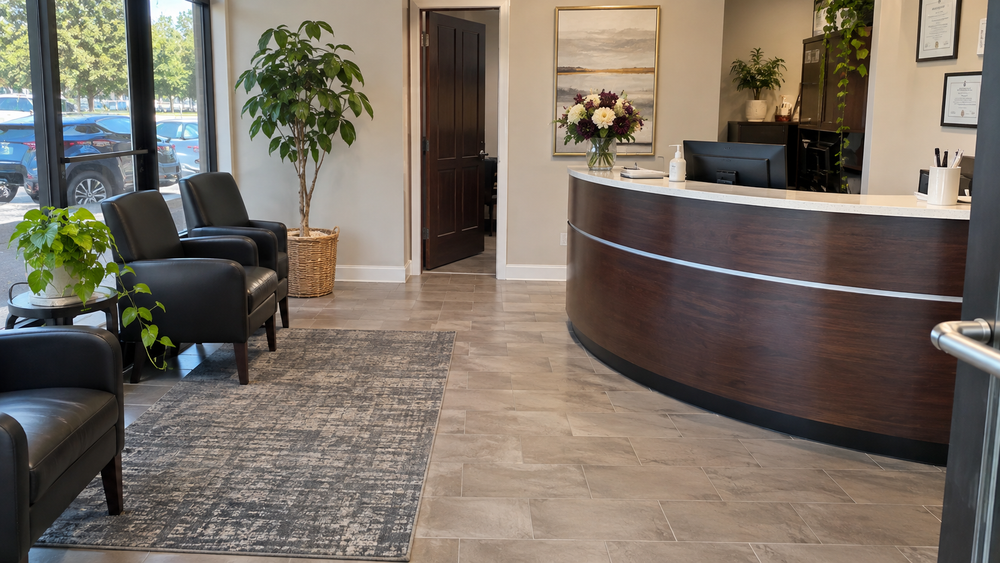
The lights have just come on inside a small business in Marietta.
A delivery is waiting near the back entrance. Someone is checking the day's appointments, and the first customer isn't expected for another twenty minutes.
The business is almost ready.
The shelves are stocked. The computers are working. The staff knows what's scheduled.
But before the door opens, there's another part of the space worth considering.
The counter where customers will place their belongings.
The glass entrance that everyone will touch.
The chairs where visitors will sit.
The restroom someone will need before the morning is over.
These aren't usually the things people mention when describing a good customer experience.
Yet they're part of the physical environment that welcomes every person who walks inside.
For small businesses throughout Atlanta, Marietta, Smyrna, and Alpharetta, maintaining that environment becomes especially important during busy seasons.
And the most useful cleaning routine begins by understanding how the space is used.
The First Thing Customers Touch
Imagine entering a small retail store.
You pull the door open, walk past a display, and approach the checkout counter.
Within seconds, you've already interacted with several surfaces.
The entrance handle.
Perhaps a shopping basket.
A counter or payment terminal.
If you're visiting an office instead, you might touch the reception desk, sign in, and sit in a waiting area.
Different businesses create different patterns of use.
But nearly all have frequently touched surfaces that deserve regular attention.
Cleaning these areas involves removing ordinary dirt, fingerprints, and residue using methods appropriate for the materials.
Some situations may also call for disinfection, which is a separate process requiring suitable products and label instructions.
A surface that looks visually clean isn't automatically disinfected.
For business owners, it's important to identify the cleaning requirements of the property rather than assuming that every service includes every type of surface treatment.
The Waiting Area Is More Than a Few Chairs
A waiting room may be one of the smallest spaces in a business.
But it can receive an extraordinary amount of use.
People sit down, move chairs, place bags on the floor, and lean against armrests.
Some visitors stay only a minute.
Others wait much longer.
By late afternoon, the room may look almost exactly as it did in the morning.
That doesn't mean it hasn't been used.
Dust may collect around furniture legs.
Small debris can settle beneath chairs.
Glass tables can show fingerprints.
And the flooring along the usual walking path may need more frequent attention than the corners of the room.
A thoughtful cleaning plan considers those patterns.
It also respects the furniture and surface materials.
Fabric seating, finished wood, glass, metal, and vinyl upholstery aren't interchangeable.
Each may require a different care method.
The goal isn't to make a waiting room look like a luxury hotel lobby.
It's to help keep an ordinary business environment clean, comfortable, and suitable for daily use.
The Spaces Customers Never See
Now walk through the door marked Employees Only.
Behind it, a different kind of activity takes place.
There's a small table used for lunch.
A microwave that gets opened several times a day.
A refrigerator where everyone stores their food.
Maybe a sink and a cabinet containing coffee supplies.
These are ordinary parts of workplace life.
But because they're not customer-facing, cleaning priorities can become less clear.
The person responsible for the reception area may assume someone else is taking care of the break room.
Employees may each clean up after themselves without anyone addressing accumulated residue on shared surfaces.
That's why commercial cleaning arrangements should identify which areas are included and who is responsible for them.
For example, wiping accessible exterior surfaces may be part of an agreed cleaning service.
Cleaning the inside of a refrigerator, handling employees' food, or organizing personal items may be separate tasks.
Clear expectations prevent misunderstandings.
A staff room deserves attention, but that doesn't mean cleaners should move or discard employees' belongings without permission.
Restrooms Have Their Own Priorities
A customer restroom plays an important role in the overall condition of a business.
Its needs are different from those of a reception desk or break room.
Sinks, faucets, toilets, and accessible surrounding surfaces require appropriate cleaning.
The floor may need attention around fixtures and entrances.
Mirrors can collect spots.
And consumable supplies such as soap and paper towels need to be monitored by whoever is responsible for restocking them.
A clean restroom is not necessarily one with decorative objects or elaborate fragrance products.
It's one that's properly maintained and ready for normal use.
Some commercial properties also have special sanitation requirements based on the nature of their business.
Medical, food-service, and other regulated environments may require procedures that go beyond general commercial cleaning.
Those needs should be identified and handled under the appropriate service arrangements.
Ordinary office or retail cleaning should never be presented as a substitute for specialized sanitation or regulatory compliance.
What the Floor Reveals About the Workday
Take a look at the floor near the front entrance.
Then compare it with the floor behind a desk that receives little foot traffic.
The difference can be noticeable.
Businesses have their own traffic patterns.
A small shop may see most movement between the entrance, merchandise displays, and checkout counter.
An office may have repeated movement between reception, meeting rooms, and shared facilities.
During late November, some Metro Atlanta businesses also begin preparing for additional seasonal customers and appointments.
That can change how frequently certain areas need attention.
A cleaning plan should reflect actual use rather than applying the same level of effort to every square foot.
The appropriate method also depends on the flooring material.
Commercial vinyl, tile, carpet, and other surfaces may have different maintenance requirements.
Routine cleaning can address ordinary soil and debris.
It cannot repair damaged flooring, worn finishes, or other maintenance problems.
Recognizing that distinction helps business owners set practical expectations.
The Closing Routine Is Part of Tomorrow's Opening
There is another side to the morning preparation.
It happens when the last customer leaves.
The door closes.
The lights are switched off in rooms that are no longer needed.
Someone checks the schedule for tomorrow.
And the business begins the process of shutting down.
This can be a useful time to identify cleaning priorities for the next opening.
Which areas received the most traffic?
Did a meeting room have more visitors than usual?
Was the break room used throughout the afternoon?
Did something happen that requires additional cleaning beyond ordinary maintenance?
Not every business needs the same cleaning frequency.
Some may benefit from more frequent appointments.
Others may have lower traffic and require a different schedule.
For commercial clients, the most useful arrangement is one that accounts for the property's size, condition, usage, and operational requirements.
What Should a Business Owner Discuss Before Scheduling?
A cleaning estimate becomes more useful when both sides understand the space.
Before booking, consider these questions:
Which areas are open to customers, and which are employee-only?
What flooring, counters, and furniture materials need care?
Are there particular opening or closing hours that affect access?
Does the building have security procedures or restricted entrances?
Who is responsible for consumable supplies and waste disposal?
Are there any special cleaning or sanitation requirements?
Will sensitive documents, equipment, or personal belongings be present?
Are additional tasks needed beyond ordinary maintenance?
These questions don't have to result in a complicated contract.
They simply help clarify expectations.
And it's always better to discuss them beforehand than to discover an important restriction after the cleaning team has arrived.
A Good First Impression Doesn't Need to Be Dramatic
Picture that small Marietta business again.
It's a few minutes before opening.
The reception counter is clean.
The waiting area has been maintained.
The restroom is ready, and the floors have received appropriate attention.
Nothing about the building has been completely transformed.
The furniture is still the same.
The walls haven't been repainted.
The business hasn't changed its identity.
It simply feels ready for the people who are about to arrive.
At Perfect Gleam Cleaning Services, we provide commercial cleaning for businesses throughout Atlanta, Marietta, Alpharetta, Smyrna, and surrounding Metro Atlanta communities.
We understand that a workplace needs more than a good appearance in a photograph.
It needs an appropriate cleaning plan that accounts for the way the space is used and the tasks agreed upon.
As local businesses move through the busy end-of-year season, those practical details deserve attention.
Not because every customer will notice the cleaned counter or the maintained floor.
But because the environment around them is part of their experience.
And a welcoming business often begins with the care given to its everyday spaces before anyone walks through the door.
